Aug 302012
 
custim medical cable

Custom Medical Cable

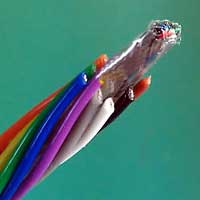
It is common to make changes to medical cables for medical devices from the original design. The reasons medical cables often are redesigned is to improve performance, add flexibility to a cable or eliminate cable design flaws.  Often, minor design changes are made to the medical cable as feedback from the end user and/or field testing are received, other times the reason for redesign is due to poor performance of the cable, product failures and high return rate.

The reason for this is medical device companies on occasion, due to time and cost savings will use off the shelf wire and cable for their products which may meet initial expectations for proof of concept, prototypes and even clinical/field trials. Readily available off the shelf wire and cable is manufactured for a broad range of use, which this type of cable may be acceptable for some applications but not for others. Commodity wire is usually constructed using conductors with  7 or 19 strands, which is fine for static applications but will not perform well with repetitive flexing and movement. This is a common problem with handheld medical devices. As the stress of repeated flexing starts to break the fine strands of the conductor the wire will become less conductive, can damage the insulation or break altogether. The use of high strand count conductors and conductors made of alloys significantly improves the damage resistance of repeated bending and flexing. Using high strand count conductors can also improve a cable’s flexibility.

In these situations after a period of use, medical device manufacturers may experience product returns and device failures due to the wire and cable not withstanding day to day use. Custom cable manufacturers see requests for medical cable redesigns often, particularly in handheld devices and other applications where the wire or cable is manipulated, bent and flexed repeatedly.  The reason for the wire and cable failure is usually due to the cable is not designed for the intended use of the application.

Every application has its unique needs and requirements. When considering the medical wire and cable for your device, it is best to discuss your application with a custom wire and cable manufacturer experienced in manufacturing medical cables.  Custom cable manufacturers can guide you through the cable design process based on your particular product requirements and can suggest conductor stranding/material, insulation materials and construction. Having a cable designed for your specific product will improve your product’s performance and greatly reduce the chance of failures and returns once your medical device is in production.

If you would like to learn how you can improve your product’s performance and longevity by using the right cable, speak to one of our engineers today. Calmont’s engineers will answer your questions and assist you with your medical device design.

Contact Calmont

If you enjoyed this article, please take a moment to share it with your colleagues. Feel free to comment.

 Posted by at 7:49 pm
Aug 222012
 

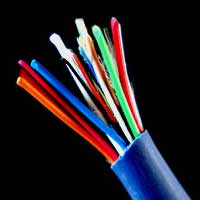
Custom medical cableEvery medical cable application is different so why settle for an off the shelf solution for a unique problem? I read quite a few discussion boards and find that when someone is looking for a specialized medical cable that the replies usually tell them to call Belden or Alpha. There is nothing wrong with Alpha or Belden however, keep in mind they mass produce generic wire and cable that covers a wide variety of uses and may not meet all your needs.
If you wanted to race in the Daytona 500, would you go to your neighborhood car dealer and buy a generic automobile to race? Of course not, you would build a custom car with the performance to handle the racetrack conditions, the type of race and your driving style. The same applies to medical cables, Your requirements are specific to your application which may include size, number and type of conductors, bio-compatibility, sterilization techniques or even a custom colored jacket.  Custom medical cables are designed specifically for your requirements and type of use.

Often for new designs and products, a small quantity is needed for prototypes, proof of concept or testing. Custom medical cable manufacturers understand this and normally have the capabilities to manufacture small runs of custom wire and cable. If your medical cable design is simple, ask your custom cable manufacture if they have any sample stock or over runs in stock that match your cable requirements.

Get the right cable for your medical device by contacting a medical cable manufacturer and discussing your needs and application. The more the cable manufacturer knows about your needs the better your design will be suited for you.

What to tell your medical cable manufacturer:

  • Type of use – How the medical device will be used, the environment, will the cable be subjected to repetitive flexing, high temperatures or abrasion?
  • Sterilization – Is the cable reusable or disposable? Will the cable be sterilized? If so how and how many cycles.
  • Patient contact – What bio-compatibility requirements are needed? Explain the extent of patient contact with the wire or cable.
  • Mechanical requirements – Voltage, temperature, flex cycles and EMI shielding. Will the cable experience repeated bending or twisting motion?
  • Physical requirements – The number of conductors, size, plating, cable construction, shape and overall diameter.
  • Expectations – Discuss what you want for performance and product longevity. Do you expect product lifetime to be 6 months or 6 years?

If you don’t have all the answers or if wire and cable isn’t your forte, it is no problem. Custom wire and cable manufacturers who are experienced with medical device wire and cable are experts in material choices, construction and the options available to you. They will guide you through the design process to insure you get the best performance out of your medical device cable.

If you want to learn more about medical cables or would like to have one designed for you, contact Calmont Wire & Cable today. Calmont has been manufacturing medical wire and cable for decades and understands that each customer has their own unique needs and expectations.


Contact Calmont

If you enjoyed this article please share it with your colleagues or sign up to receive notifications of new articles and posts. Feel free to leave a comment.

 Posted by at 7:27 pm
Aug 162012
 
Custum medical cable lumens

Medical cables and lumen cables

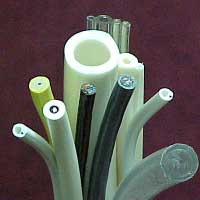
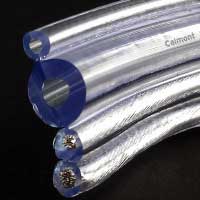
Medical cables do differ from cables used in other industries. It isn’t recommended to use standard/ generic wire and cable in your medical device design unless the wire or cable doesn’t need to meet any medical requirements or is used internally in your device. Every industry has it’s unique requirements when it comes to wire and cable. The medical industry is no exception. Medical wire and cable is readily available “off the shelf” however, many medical industry engineers turn to custom medical cables due to their application’s unique requirements. What makes medical wire and cable different? Besides using medical grade materials,  medical devices are designed to be precise whether it is for diagnostics, patient monitoring, surgical or provides imaging/video. The performance and accuracy of the device needs to be taken into account. Using a custom medical cable designed for the specific tasks of the device will improve performance and product lifetime as opposed to generic cables. Medical device cables may need to provide multiple functions with just one cable such as, data, power fluids or air. Medical cables can be complex or a simple design, in either case custom medical device cables offer the performance and longevity needed for this type of application.

Another unique feature of medical device cables is the insulation and jacket compounds are formulated to meet the specific requirements of medical applications such as:

  •  Sterilization - Sterilization techniques include autoclave, E-beam, chemicals to name a few. What insulation and jacket materials can withstand do vary and it is important to take this into consideration when designing your medical device. Sterilization properties chart is a helpful tool, but discussing your requirements with a custom medical cable manufacturer can save you research time.
  • Bio-compatibility - Patient contact is another requirement for medical device cable. Contact can be from exterior to implantable. Medical wire and cable jacket compounds are available in many grades and the extent of patient contact should be discussed with your medical cable manufacturer.

Disposable or reusable?

Disposable cables are normally used for a limited usage and do not undergo repeated sterilization before being disposed. Disposable wire and cable are made of less expensive materials such as PVC. Reusable medical cables normally have to withstand anywhere from hundreds to over a thousand sterilization cycles.

Medical device wire

Medical device lead wires can also differ from generic wire. Sensors and monitoring devices are becoming smaller, wireless and their functions are more complex. Patient monitoring devices often require lightweight, small gauge, ultra flexible wire for patient comfort while being monitored. Patient monitoring devices are sometimes worn for long periods or even implanted. The need for small extremely flexible wire is becoming more evident with these types of medical applications.

A few examples of long term patient monitoring include:

  • Fetal monitoring devices – Fetal monitors can be wired to a receiver or wireless for extended monitoring. The monitor is connected to a unit which sends information to a receiver allowing the patient to move freely. Small gauge very flexible wire and cable is used for this type of product.
  • Sleep monitors – Patient comfort is important with this type of device. The ultra flexible wire need to be lightweight and a small gauge using flexible insulating materials such as TPE or silicone.
  • Heart monitors – This type of long term device normally uses cables instead of lead wires. Heart monitor devices can be connected to an implant then to a battery/power pack or sending unit which sends information to a receiver/recorder. Cables may be required to send data, supply power, be flexible and be resistant to abrasion and cleaning solutions. Other types of heart monitors may be connected to sensors externally on the body for extended periods.

When considering your medical device wire and cable for your product be sure to speak with a custom medical cable manufacturer to find out what materials and construction will work best for your device.


 Contact us

If you enjoyed this article, please pass it on to a colleague. Feel free to comment.


 Posted by at 7:01 pm